Title: About Warratyi
Dr Cliff Coulthard was shown the Warratyi Rock Shelter by Adnyamathanha Elders Colin and Lachlan Wilton as a young man during his time working on Umberatana Station.
In 2012, Cliff visited the site with Flinders University researcher Giles Hamm while surveying gorges in the northern Flinders Ranges. Together they saw the potential in the site to reveal both evidence of historical Adnyamathanha occupation as well as fossil remains of ancient animals.
In Adnyamathanha, the word ‘Warratyi’ means emu. During the first excavations, an emu wandered into the rock shelter, and stole one of the workers sandwich – hence the name of the site.
The Adnyamathanha Traditional Lands Association (ATLA), as the representative body of the common law holders who have Native Title Rights to the area, approved a request to establish a project and to excavate the site. Funding was needed for the project and Dr Cliff Coulthard nominated Iga Warta Aboriginal Corporation to partner with Flinders University to seek funding. Once funding was secured, ATLA selected Adnyamathanha people to participate in the excavations. People were selected in the same way ATLA selects participants for mining surveys.
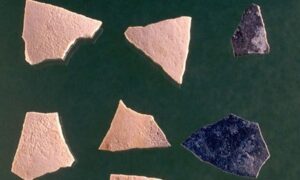
Collaborative excavations at the site over the past 18 years have uncovered tools, ochres, cooking fire remains, animal bones and plants dating back at least 49,000 years. Warratyi Rock Shelter is the site of the oldest scientific evidence of human occupation in South Australia and one of the oldest in the country. Further work is planned to excavate deeper to the bedrock of the shelter.
Any future work, including further excavations, will include updates to all common law holders.
NATIONAL INTEREST STATEMENT
This project will provide new insights into how cultural innovations, symbolic behaviours and technological sophistication facilitated the Indigenous colonisation and occupation of Australia’s arid zone, from 49,000 years ago. It will document Indigenous responses to climatic and environmental changes at the site of Warratyi in the Northern Flinders Ranges and assess how this relates to the early occupation of the arid zone. Working collaboratively with the traditional owners, the Adnyamathanha, this research adopts the methodological innovation of braiding Western and Indigenous science to ensure that understandings of Warratyi’s exceptional archaeological record are as nuanced and wide ranging as possible. Bridging the sciences and the humanities, it will enhance scholarly and public understandings of how Indigenous cultural innovations and technological sophistication shaped the human past in Australia, enable better decision-making around cultural heritage assessments, and contribute directly to Australia’s plans for a World Heritage nomination of the area that includes Warratyi in South Australia.